It is possible to learn the order of a tai chi form without understanding very much about tai chi. The sequence matters, but so does the way you move through it. Two people may perform the same posture while organizing their weight, attention, and effort very differently.
These six principles can help you begin to notice that difference. They are questions for practice, not instructions to perfect all at once.
1. Structure: are you supported without becoming rigid?
Structure does not mean holding yourself in a military pose. It means finding a useful relationship among your feet, legs, torso, and head so that movement has support. If you stand with locked knees and raised shoulders, you may feel strong for a moment while actually making the next movement harder.
Try asking, “Can I feel the ground beneath me while leaving room to move?” Your instructor can help you adjust the details to your body and the posture you are learning.
2. Release: what effort can you let go of?
The instruction to relax is easy to misunderstand. If everything becomes limp, you lose the very structure that lets the body move as a whole. Releasing means recognizing effort that is not helping: a tight jaw, a braced chest, hands gripping the air.
You do not have to command yourself to be perfectly relaxed. Notice one place where effort appears, see whether it is needed, and observe what changes when you let some of it go.
3. Full and empty: where is your weight?
Before you step, one leg generally needs to support you enough for the other foot to move freely. Beginners often discover that they thought their weight had shifted when it had barely moved at all. The distinction between full and empty helps make a transition intelligible.
In a slow, comfortable weight shift, ask yourself which leg is supporting you and whether you can move the other foot without having to lunge. Do not force a large stance to prove the point. The aim is clarity, not drama.
4. Continuity: what connects one movement to the next?
A form is made of named movements, but practice happens in the transitions too. If every named posture becomes a stop sign, the sequence breaks into separate pictures. Continuity asks you to notice how the end of one action prepares the next.
Slow down a transition you already know. Is there an abrupt pause because you lost your balance, or is the change deliberate? Can your attention stay with the movement between its recognizable endpoints?
5. Attention: what are you actually observing?
Concentration is not the same as staring intensely or trying to control every muscle. In tai chi, attention can become more precise and less forced. You can observe where your weight is, whether you are breathing comfortably, and how your hands relate to the rest of your body.
Pick a single observation for a few repetitions. Then let it go and notice something else. This gives your practice a purpose without burying you under instructions.
6. Responsiveness: can you change without fighting yourself?
Tai Chi Chuan has a martial dimension, and partner work can make its principles especially clear. If you stiffen against every change, you may feel secure but become easy to disturb. If you yield without support, you may simply give way. The skill lies in recognizing a change and responding while keeping your own balance and organization.
Even in solo practice, you can notice a simpler version of this: when you wobble, do you hold your breath and freeze, or can you make a small, calm adjustment? More advanced partner work belongs with appropriate instruction; there is no need to improvise it from a paragraph.
Do not turn principles into a checklist
These ideas belong together. A clearer weight shift can improve structure; releasing excess tension may make continuity easier; attention allows you to notice both. Practice one useful question at a time and revisit it as your skill changes.
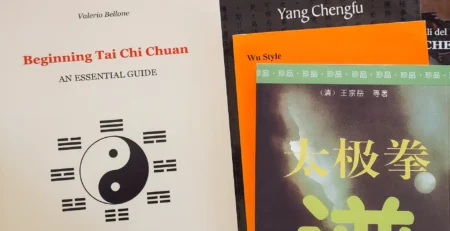
The classical writings of Taijiquan speak about relationships such as full and empty, movement and stillness, and responsiveness. Their language can feel distant until you connect it with an ordinary moment in practice. That connection is central to Beginning Tai Chi Chuan: An Essential Guide, which includes thirteen selected passages with commentary.