
Author · Tai Chi Chuan teacher · Researcher
Practice, study and a life of observation.
My work brings together Tai Chi Chuan, teaching, classical texts, writing and a wider background shaped by visual culture, travel and more than two decades of professional experience in communication.
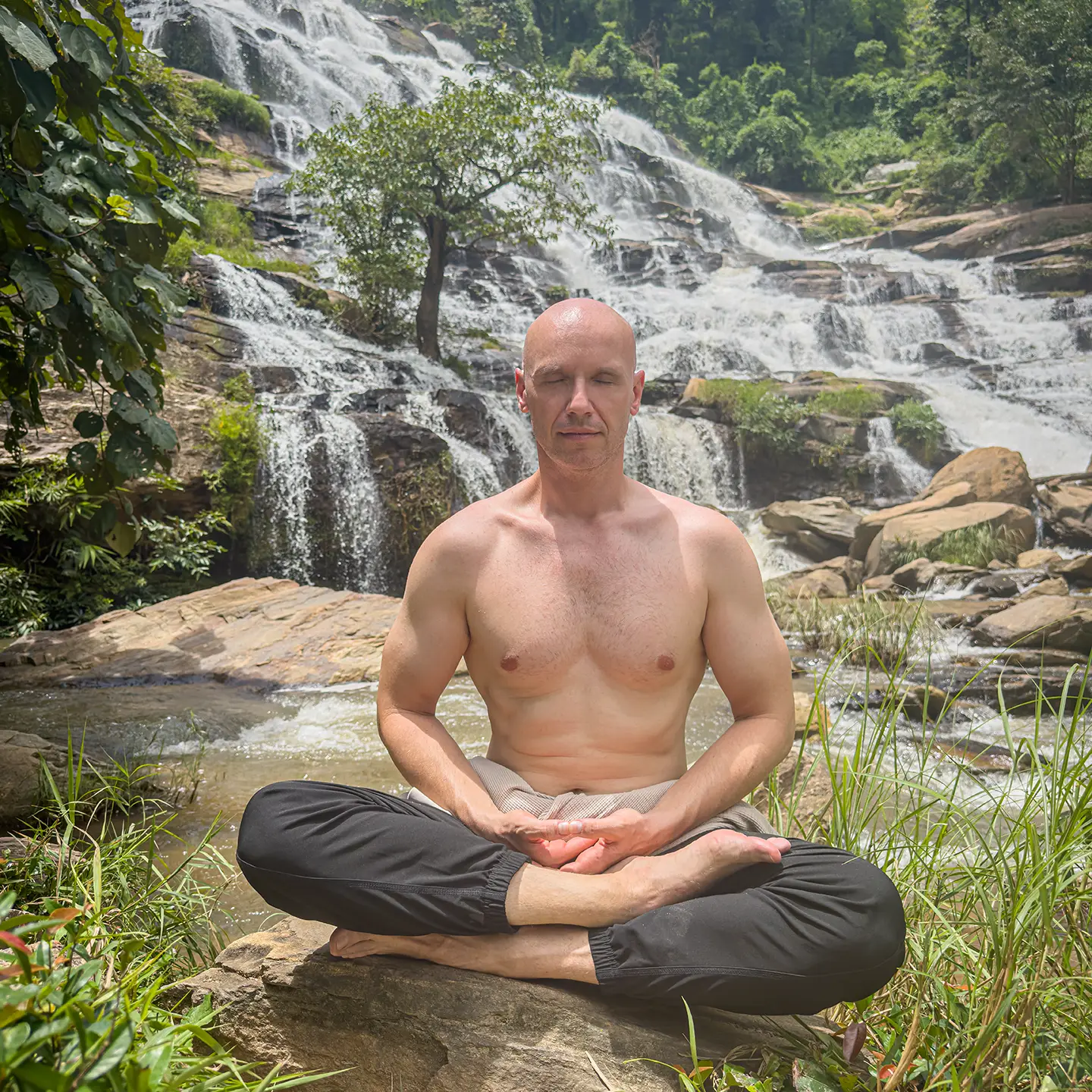
From competition to practice
I became interested less in being better than someone else, and more in understanding what practice could change in me.
I began with sport and martial arts at an early age, studying disciplines including judo, karate, escrima and Muay Thai. Some of that training also took place within a competitive framework.
Those experiences were formative, but over time I became increasingly interested in something competition alone could not answer: how physical training could develop attention, balance, adaptability and a different relationship with effort, conflict and change.
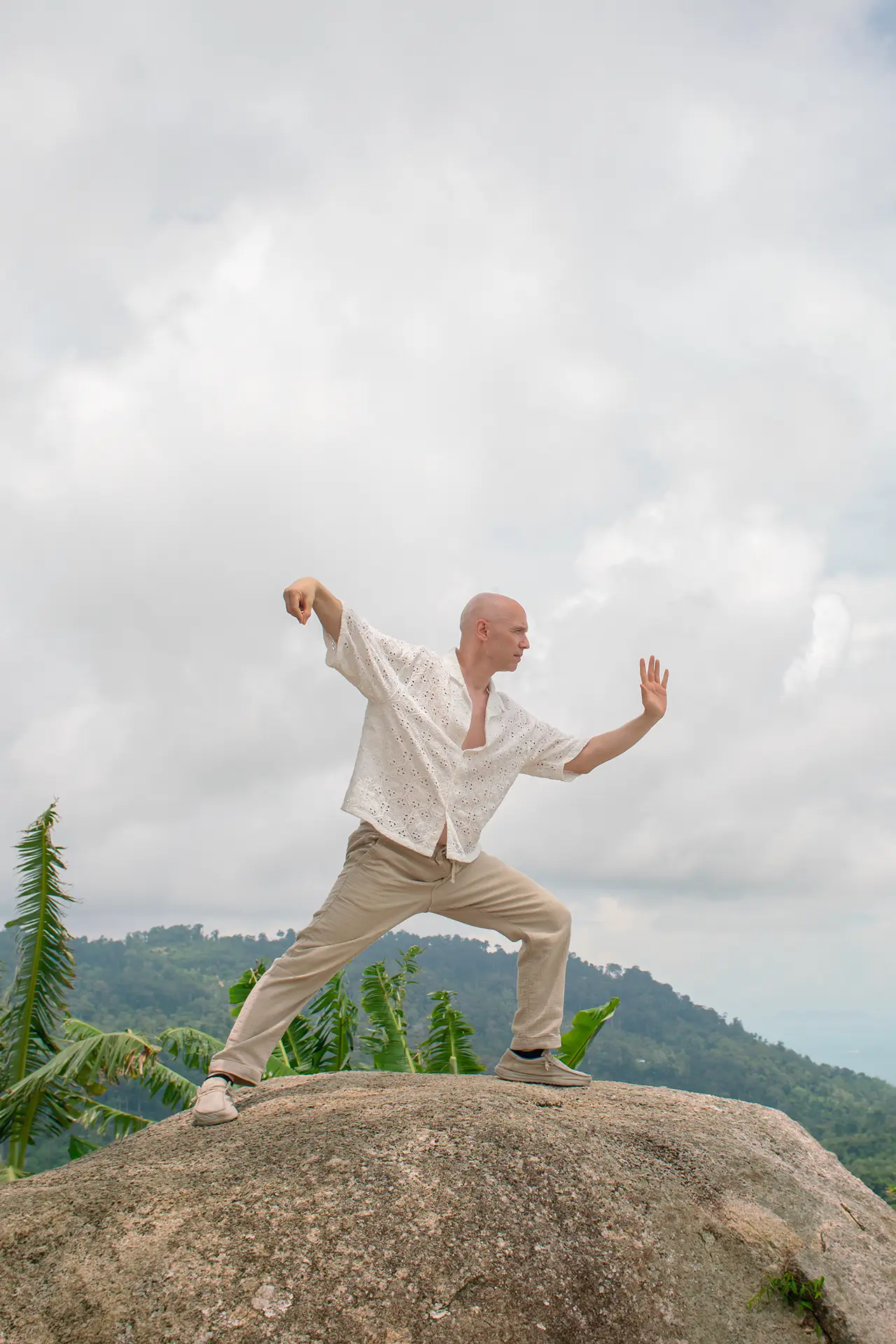
Meeting Tai Chi Chuan
A different way of training
This search eventually brought me to Tai Chi Chuan, Qi Gong and, later, to different approaches to Daoist and Buddhist meditation. I did not encounter them simply as relaxing activities, but as methods for observing tension, unnecessary effort, automatic reactions and the relationship between attention and movement.
Tai Chi gradually became the central thread. Its practice involves solo forms, weapons, partner work such as tui shou, methods for releasing unnecessary tension, and martial training. Yet the value of the art lies not merely in its techniques.
What continues to interest me is the interaction between structure and change, force and sensitivity, intention and action: how these relationships can first be experienced physically and, over time, become a broader way of understanding practice.
Study without dogma
Keep learning. Keep testing.
I have studied with teachers from different lineages and approaches. Rather than treating differences as a problem, I have tried to use them as an opportunity to compare methods, question assumptions and distinguish principles from habits.
Question certainty
Doubt, when used well, does not weaken practice. It helps prevent inherited explanations from becoming dogma.
Compare and verify
Different schools may use different language and methods. What matters is identifying what can actually be observed, trained and tested.
Return to experience
A concept becomes valuable when it changes the quality of practice rather than simply adding another explanation to remember.
Teaching
Taiji Gate
In 2014 I founded Taiji Gate as the practical expression of this approach: a school in which traditional material is preserved, examined and made understandable through structured training.
Teaching centred primarily on the Yang tradition, with attention to structure, release, continuity, partner work and martial principles.
Training methods are used to develop awareness, coordination, breathing, mobility and the ability to reduce unnecessary effort.
Taiji Gate also includes structured instructor training designed to connect technical knowledge with teaching method, progression and practical understanding.
I do not see tradition and innovation as opposites. What deserves to be transmitted must also be made intelligible to people living in a different cultural and linguistic context.
Writing and research
Making old texts usable again
My writing developed from the same need that shaped my teaching: to reduce misunderstanding and make traditional ideas more usable. Classical Tai Chi texts are concise, culturally distant and often transmitted through multiple layers of interpretation. Translation therefore requires more than replacing one word with another.
Respect the source
The original text matters. Translation should preserve the relationship with the source rather than hide it behind a modern interpretation.
Understand the context
Historical language, technical vocabulary and Chinese conceptual frameworks cannot always be transferred literally without changing their meaning.
Return to the body
Translation and commentary are not an end in themselves. The central question remains whether a principle can illuminate what a practitioner actually experiences.
A growing body of work
Seven books published in Italian.
Since 2017, this research has developed into a wider editorial project including an introductory guide to Tai Chi Chuan and a three-volume investigation of foundational, Chen and Yang classical traditions. The first English-language edition is now available internationally.
A wider background
Image, design, travel and observation
Tai Chi did not develop in isolation from the rest of my life. Photography, visual communication and years spent moving between different countries have strongly influenced the way I observe, explain and structure information.
Learning to observe
My professional path in photography began in Sydney with formal training in commercial photography and later developed through product, fashion, portrait, theatre, editorial and documentary work.
Over the years my photographs appeared in editorial contexts including Frankfurter Allgemeine Zeitung, Die Welt and La Repubblica, and received recognition in international photography competitions.
Photography taught me to pay attention to what is actually present before deciding what it means — a lesson that has remained unexpectedly relevant to martial practice.
Photography archive →Learning to communicate
My work in digital communication began during the early development of the web and became professional through studies in Digital Design at IED — Istituto Europeo di Design in Turin.
More than two decades of work across web design, visual identity, usability and communication reinforced a simple idea: complexity is not made useful by adding more explanation, but by finding a clearer structure.
That principle now influences both my teaching and my editorial work: difficult material should not be simplified until it becomes false, but clarified until it becomes usable.
Digital work at WPixo ↗Selected milestones
A path built across disciplines
Early martial arts training develops alongside extensive travel, particularly through Asia and Oceania.
Professional photographic training begins in Australia, followed by work across commercial and editorial fields.
Formal study in digital and visual communication develops into more than two decades of professional work.
Foundation of the school through which the teaching of Tai Chi Chuan, Qi Gong and related practices is developed.
A long-term study, translation and commentary project begins around traditional Taijiquan literature.
The research develops into published books, including the three-volume project devoted to foundational, Chen and Yang textual traditions.
Beginning Tai Chi Chuan: An Essential Guide becomes the first title prepared for an international English-speaking readership.
Practice remains the test
Tradition without imitation.
I see tradition neither as something to reject nor as something to reproduce mechanically. The task is to study it carefully, understand what it is trying to transmit, test it through experience and allow it to become something genuinely embodied rather than merely inherited.