You do not need to be flexible, fit, or familiar with Chinese martial arts to start tai chi. You do need a little patience. From the outside, the movements can look simple; from the inside, you are learning to coordinate posture, attention, balance, and timing in a new way.
If you are wondering where to begin, think less about learning an entire sequence and more about building a practice you can return to.
What exactly are you starting?
Tai chi, also called Tai Chi Chuan or Taijiquan, is a Chinese martial art that many people now practice for movement, attention, and general well-being. Schools may teach different styles and forms. A form is a sequence of movements practiced in a particular order; it is one way to train, not the whole art.
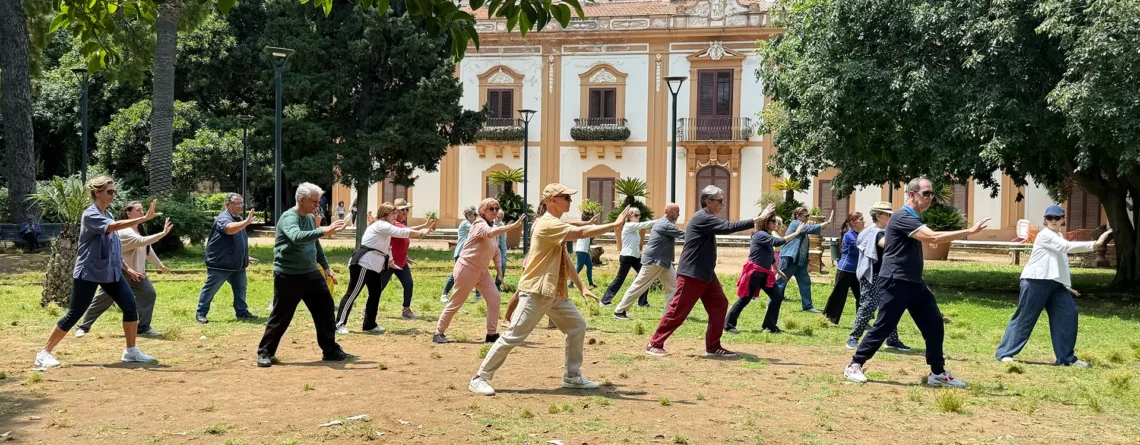
You may encounter a short form, a long traditional form, individual exercises, standing practice, or work with a partner. These approaches can look different, but a good beginner class should help you understand how you stand, move, shift weight, and respond to instruction. You should not have to master the history or terminology before your first lesson.
Choose a class where you can learn, not just follow along
The easiest starting point for most people is a beginner class with an instructor who can see how they move. Look for clear explanations, a pace that allows questions, and adaptations when a movement does not suit a student’s current ability. A welcoming class may still be demanding: good teaching makes the work approachable without pretending that coordination arrives instantly.
When considering a class, ask:
- Is this course meant for complete beginners?
- What does a typical class include besides learning a form?
- Will the instructor give individual feedback?
- Can movements be adapted if a stance is uncomfortable?
You do not have to choose a “perfect” style in advance. A teacher you can learn from matters more at the beginning than a style name you found online.
What to expect in your first class
You may spend time standing, stepping slowly, shifting from one leg to the other, or repeating a small section of movement. You may hear instructions that seem contradictory at first: stay upright but do not become stiff; relax but do not collapse; move slowly without losing a sense of direction.
That is normal. These are relationships you learn to feel over time, not boxes you can check after one lesson. Wear comfortable clothes and shoes suitable for the space. Tell the instructor about any limitation that affects how you stand or move, so they can suggest an appropriate version of an exercise.
A simple approach to your first few weeks
Week one: observe. Notice your habitual way of standing. Do you hold your shoulders up? Do you rush through the moment when your weight moves from one leg to the other? Curiosity is more useful than trying to look graceful.
Weeks two and three: repeat a small amount. Practice one or two movements or principles you actually remember from class. Five attentive minutes can give you more to discuss with your teacher than thirty minutes spent guessing through a full sequence.
Week four and beyond: ask better questions. Instead of only asking, “Did I remember the order?”, ask, “Was my weight really on the supporting leg?” or “Did I tense my shoulders as I turned?” Your teacher can work with a specific observation.
There is no fixed timetable for progress. Some aspects of tai chi become clearer quickly; others return as new questions after years of practice.
Three beginner mistakes you can avoid
Trying to memorize everything at once. A form is easier to learn in parts. Repetition helps you notice how a transition works, not merely what comes next.
Confusing relaxation with softness everywhere. Releasing unnecessary tension does not mean letting your posture collapse. Look for a sense of support through the feet and a body that can move without bracing.
Judging the practice by how it looks. A smooth-looking sequence can hide a loss of balance or awareness. Work with what you can feel and what your instructor can help you correct.
Can a book help you start?
Yes, if you give it the right job. A book can explain terms, clarify principles, and help you arrive at class with better questions. It cannot watch your stance or replace feedback from a teacher. If you are learning on your own for now, reading can still give you a framework for choosing instruction later.
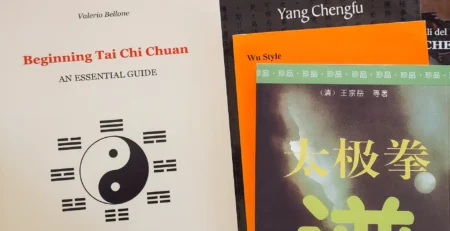
I wrote Beginning Tai Chi Chuan: An Essential Guide for that part of the journey: making sense of what you are practicing, rather than asking you to memorize a form from a page. It introduces the foundations and brings selected passages from the classical tradition into conversation with actual practice.