How long does it take to learn tai chi? If you mean remembering the movements of a short form, it may take several weeks or months of regular lessons and practice. A longer form can take considerably more time. If you mean understanding what the movements are teaching you, there is no single finish date.
Those answers describe different stages of learning. Knowing which stage you mean makes the question much more useful.
How long does it take to learn a tai chi form?
A form is a sequence of movements learned in a particular order. Learning a form can mean recognizing the next movement when the teacher demonstrates it, following the whole sequence with a group, or remembering it well enough to practice alone. These are separate milestones.
There is no timetable that fits every school. As one concrete example, the Tai Chi Foundation describes about 30 to 36 class hours for the basic movements of the form it teaches. A teacher at T’ai Chi in Oxford estimates at least six weeks for a short form and around a year to memorize a long one. These are examples of particular approaches, not promises about your progress.
The length of the form, the pace of instruction, and what you practice between classes all matter. Ask your own teacher which sequence you are learning and what they expect a beginner to be able to do after the first course.
What can you learn before you know the whole form?
Quite a lot. In your first lessons you can begin to notice how you stand, how your weight moves from one leg to the other, and where you add effort you do not need. You may still forget the next posture. That does not erase what you learned in the movement you just practiced.
Consider a step you have repeated with your teacher. At first, you may need help remembering where to place your foot. Later, you may notice whether you were balanced before lifting it. The sequence has stayed the same, but the quality of your attention has changed. Both kinds of progress belong to learning Tai Chi Chuan.
Why might your timeline differ from someone else’s?
The course teaches a different amount. Memorizing a short introductory form and learning a long traditional sequence are different tasks. Two people can make similar progress while covering different numbers of movements.
You have different opportunities to repeat the material. A class gives you instruction and correction; practice between classes helps you remember and investigate it. Even a few attentive repetitions of a short section can be useful.
Teachers emphasize different things. One course may move quickly through the order of a form. Another may spend longer on standing, stepping, coordination, or partner exercises. Ask what the course is designed to teach before comparing its pace with someone else’s.
Does memorizing the form mean you have learned tai chi?
It is a meaningful achievement: you can now practice the sequence without someone leading you through every step. It also gives you a more reliable way to study the movements. When you no longer have to devote all your attention to remembering what comes next, you can investigate how you move from one posture to another.
You may begin to notice whether a weight shift is clear, whether you brace when you turn, or whether the movement of your hands is connected to the rest of your body. These questions remain useful when the sequence is familiar. They are part of why practitioners return to the same form for years.
How should you practice between lessons?
Work with the portion you actually remember. Repeat it at a pace that lets you notice what is happening, and bring one specific question back to your teacher. “I lose my balance before this step” gives you more to work with than “I’m bad at tai chi.” If you have forgotten a transition, ask for a reminder rather than turning a guess into a habit.
It can also help to understand the purpose of what you are learning. A sequence gives you material to practice; clear ideas about structure, release, attention, and intention help you use that material well.
Where can a book help?
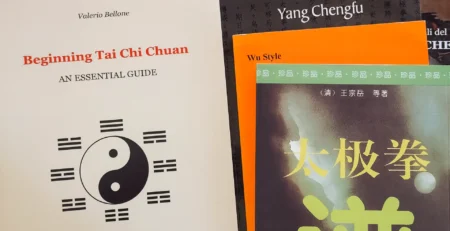
I wrote Beginning Tai Chi Chuan: An Essential Guide for readers who want to understand what Tai Chi Chuan is while they are learning it. The book explores the ideas and processes that guide practice and introduces the original classical texts through thirteen selected passages, each explained in relation to the art.
A teacher can correct what they see in your movement. Reading can help you recognize what you are trying to develop as you return to class and to your own practice. You do not have to wait until you have memorized a form to start asking those questions.